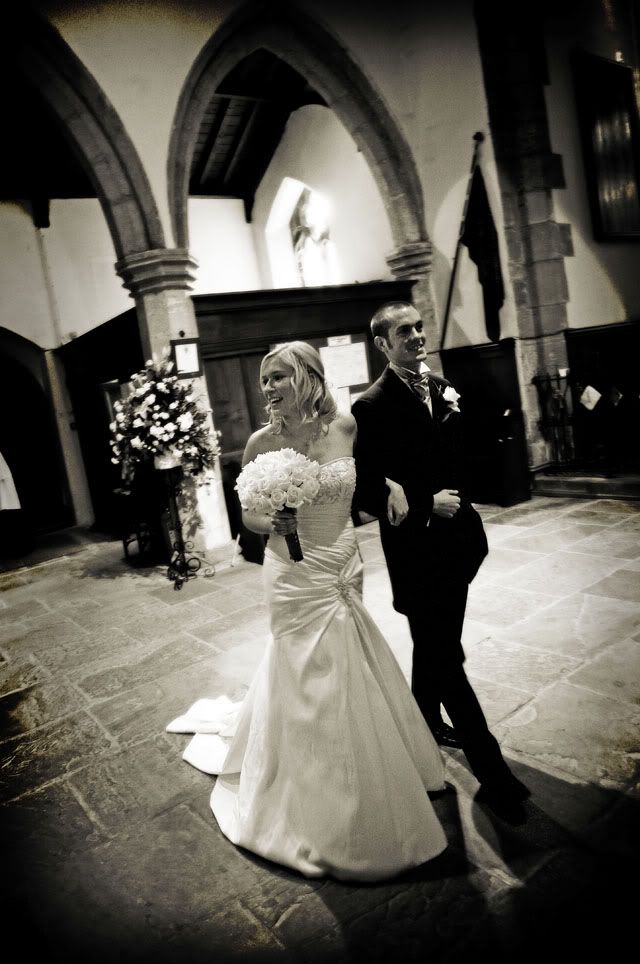
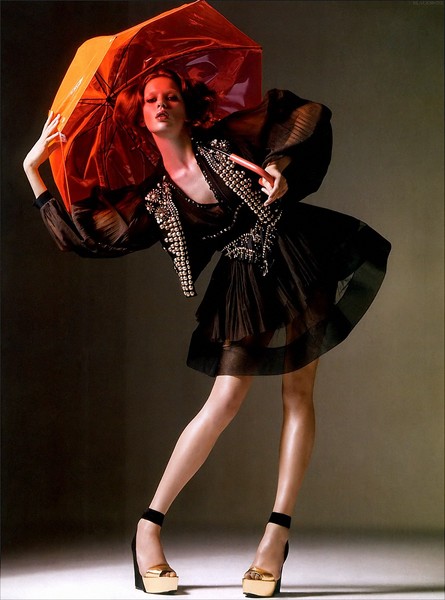
Ian Han is a Cheshire based wedding and portrait photographer. He came in to show us some of his work and talk about his approach to this style of photography.
He started by talking about the different elements of wedding photography. He explained that it is a versatile aspect of photography as it incorporates so much. It is a mixture of documentary, still life, portrait, architectural. Fashion and food photography; and sometimes can also include studio photography.
Each wedding photographer has a different approach to their work. Han likes to meet with the couple to discuss their requirements and wishes for the big day as well as having a photo-shoot with the couple before the wedding. This is so that the couple can get to know Han and will feel more relaxed around him on their wedding day. It is also so Han can get to know the couple and see how they act in front of the camera. In these meetings he explains that it is useful to gain a schedule for the day and to make sure that adequate time has been set aside to take photographs. It is also useful for the couple to make a list of who they wish to be included in formal photographs and for them to allocate someone to organize the groups ready for the photographs. This will help ensure that the day runs smoothly and that everyone who is wanted is included in the images.
As the photographer it is your job to document the wedding and everything that is going on during the day, including capturing moments which can not be planned for. There are key shots that most wedding photographers will aim to get, there may also be specific shots that the couple may request.
On the day the focus is usually on the bride, she is most likely the one who has planned and organized the wedding. The day will usually start in the brides house, documenting her and bridesmaids getting ready. These are part of the establishing shots and should include key elements such as details on the brides and bridesmaids dresses, shoes, flowers etc. the photographer will then usually make their way to the venue before the bride and get there in time to document the groom and groomsmen arriving, then shortly after the brides arrival. The photographer should also take shots of the venue. Next is the ceremony where shots of the bride waling up the isle etc. are usually expected. Key shots at this point also include the signing of the book, and the couples first kiss as a married couple. When taking these shots it can be important to ask whoever is conducting the ceremony to ask guests to wait until after you have taken the shots you require, before they take their own as your own images may end up overexposed due to extra flashes.
At the next venue it is also important to take establishing shots of the building/room. You also need to take details shots of seal and table decorations, flowers, place names etc. as these as well will have been carefully planned. If possible it is a good idea to get to the venue a few days before the wedding so that you can see the space and the type of lighting which is there. You will then be able to adjust your ISO and white balance accordingly.
When taking formal shots you should be quick and make it as enjoyable as possible, guests as well as the newly weds will not want to stand around for long periods of time. When taking group shots you generally need to focus in the middle of the group and have an aperture of around f8. You need to also be prepared for outside shots and be able to quickly and effectively change camera settings to suit the lighting situation.
There will then be key shots like speeches and the first dance to take. When photographing speeches it is often useful to move around the room and anticipate where the speech is headed so that you can capture the reactions of the guests. It will then depend on each couples requirements as to how long you are at the reception for.
The next part of the wedding is the post production, software like photoshop and lightroom are good for batch processing. You will also need a way to present and sell images to your client. Han often uses photobooks from various companies which give a professional finish. He brought some of the books which he has produced with him to show how he presents the finished product to the client.
Over the years in which Han has been photographing weddings he has increased his collection of equipment. He suggested that the basic kit needed to shoot a wedding would be two SLR cameras, an off camera flash and a tripod. Plenty of memory cards and batteries are also needed. A range of lenses is also useful at a wedding because of the range of photographs you will be taking, a standard lens could probably be used for the majority of shots, a wider lens could be useful for wider shots, macro for details etc. He also explained that, especially when shooting weddings, the professional ranges of cameras can be very useful. They often have quieter shutters and so are less disturbing to the service and have screens displaying settings on the top of the camera so changing settings can be quicker.